
Published March 4, 2026
Overview
This document describes the structure and installation method of a two-piece aluminum channel system designed for mounting pixel-style permanent exterior lighting systems along soffits and rooflines.
Many modern permanent lighting systems use individually spaced LED pixels connected by a wiring harness. These systems are commonly installed along residential rooflines to provide architectural or decorative lighting throughout the year.
The channel system described here provides a structured mounting method that improves installation consistency and produces a cleaner finished appearance compared to mounting pixels directly to the building surface.
The channel system described here reflects a mounting approach used for pixel-style permanent lighting systems at the time of publication.
Lighting Compatibility
The channel system is designed for use with pixel-style permanent lighting products commonly available on the market.
Examples include lighting systems produced by manufacturers such as:
- Govee
- ASAHOM
- Eufy
These lighting systems typically consist of individual LED pixels spaced along a cable harness. Each pixel is installed through an opening in the channel so the LED lens faces outward while the wiring remains concealed within the channel cavity.
Channel Construction
The mounting system uses a two-piece aluminum extrusion design. The pixel channel section attaches to the base mounting rail using an integrated snap-fit interface formed as part of the extrusion profile.
The system consists of:
- Base Mounting Rail
A thin aluminum extrusion that is mounted directly to the soffit or exterior surface using screws. - Pixel Channel Section
A larger aluminum extrusion that contains the openings for the LED pixels and internal features used to retain the lights.
After the lighting pixels are inserted into the larger channel section, that section snaps onto the base mounting rail installed on the structure.
This two-piece design allows the base rail to be installed first, followed by installation of the pixel channel once the lights are prepared.
Pixel Retention Method
The larger channel section includes two inward-facing retaining ribs positioned on the interior walls of the extrusion near each light opening.
When an LED pixel is inserted through the opening, these ribs provide a light mechanical interference with the housing of the pixel. This interference helps keep the pixel positioned within the opening while still allowing the light to be installed or removed when necessary.
This retention method allows the pixels to remain consistently positioned while the wiring harness remains protected inside the channel cavity.
Channel Dimensions and Layout
Channel dimensions and pixel spacing vary depending on the lighting system the channel is designed to support.
Different lighting products use different pixel spacing and housing sizes, so the extrusion profiles and hole spacing are adjusted accordingly.
Examples of compatible configurations include channels designed for systems such as:
- Govee permanent lighting systems
- ASAHOM permanent lighting systems
- Eufy permanent lighting systems
Each version of the channel is designed to align with the spacing and dimensions used by the corresponding lighting system.
Cross-Section Profile
The aluminum channel is produced using an extrusion process that forms the internal cavity, exterior mounting surfaces, and internal pixel retention ribs as part of a single profile.

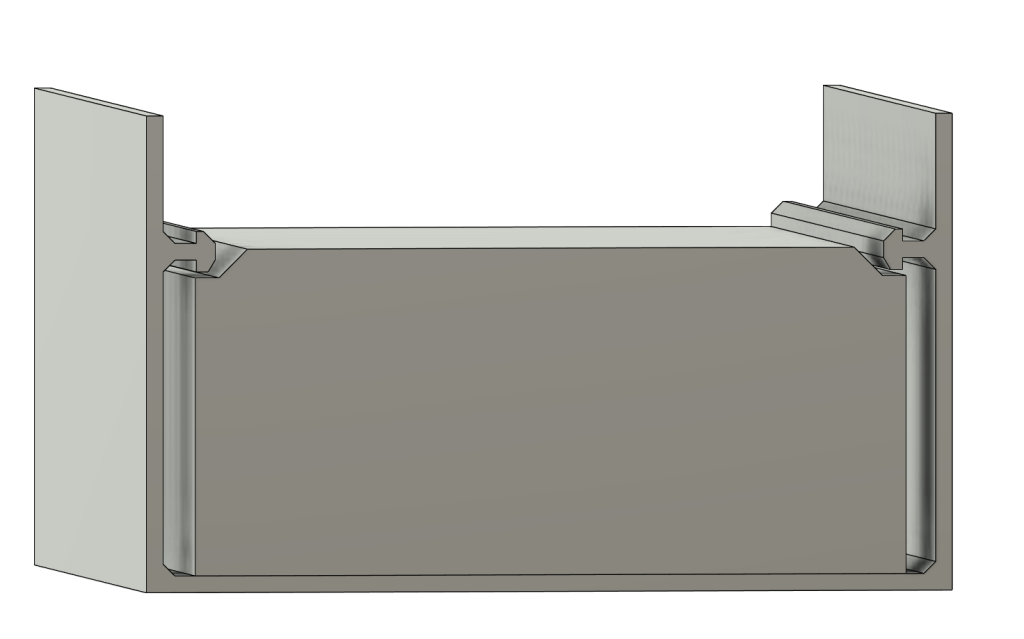
The profile provides clearance for the wiring harness while maintaining consistent outward alignment of the installed LED pixels.
Variations of this channel design may include different extrusion dimensions, retention rib geometries, snap interface shapes, or pixel spacing depending on the lighting system being supported.
Installation
Installation of the channel system typically follows these steps:
- The base mounting rail is first attached to the soffit or mounting surface using screws.
- LED pixels are inserted into in the larger channel section, aligning with the holes. Each pixel is held in position by the two internal retaining ribs located near the light opening.
- After the lights are installed into the channel section, the channel is snapped onto the mounted base rail.
This installation sequence allows the pixel channel to be assembled and then secured to the structure after the lights have been positioned.
Intended Application
This type of aluminum channel system is intended for residential and light commercial installations where pixel-style permanent lighting systems are mounted along soffits, rooflines, or architectural edges.
The two-piece channel design simplifies installation while providing a clean and consistent appearance once the lighting system is installed.